
NSW Pool Fence Rules In Plain English
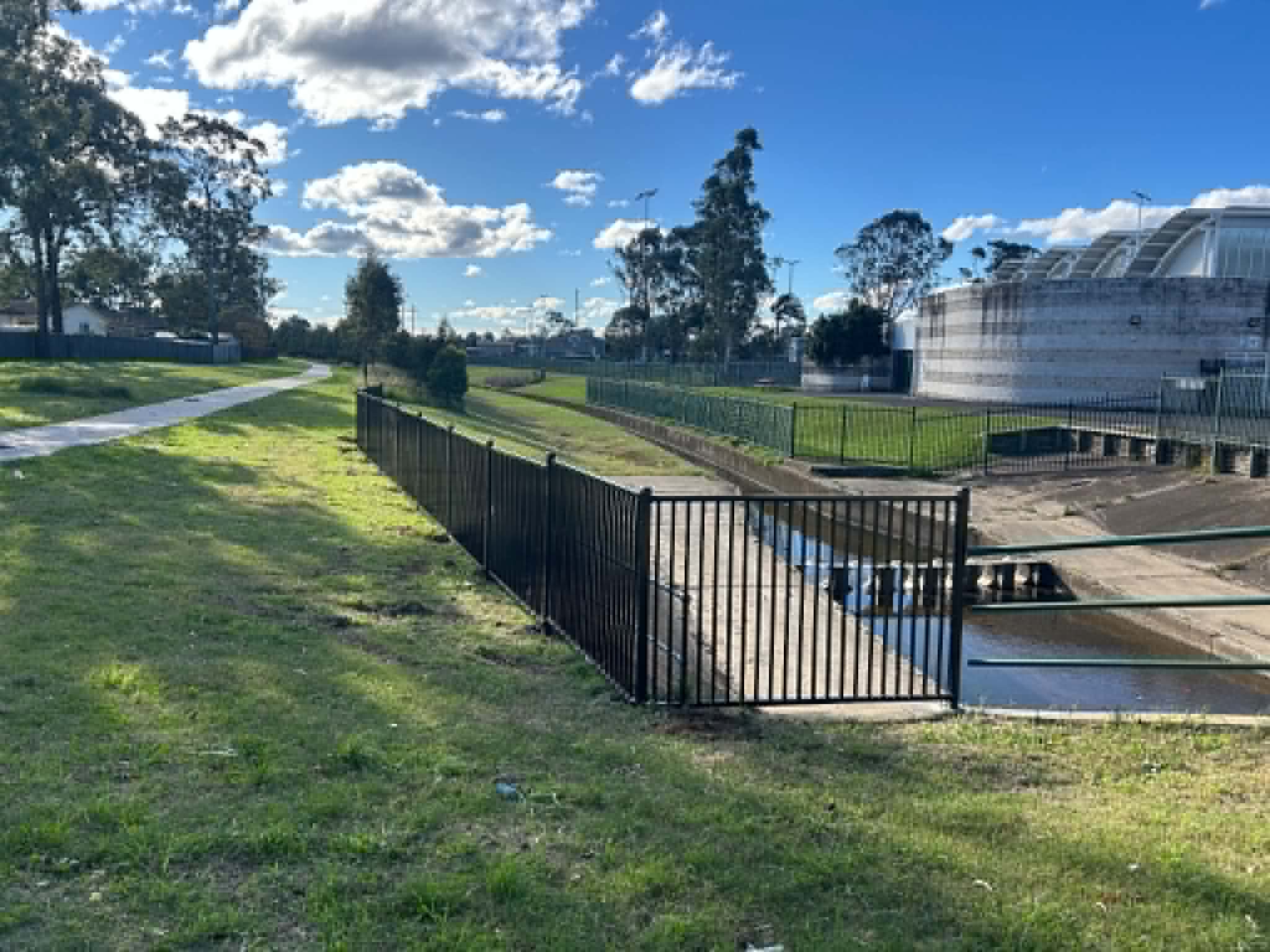
In New South Wales, pool safety laws are strictly enforced under the Swimming Pools Act 1992 and Australian Standard AS1926.1. Whether you are installing a new swimming pool in Glenmore Park or upgrading an existing barrier before selling your property, meeting compliance standards is essential to protect young children and avoid costly council re-inspections.
A NSW pool barrier must be at least 1.2 metres high, with no gap under it over 100 millimetres and no gap between vertical members over 100 millimetres. A 900 millimetre non-climbable zone must stay clear outside it, and the gate must be self-closing, self-latching, swing outward, and latch at 1.5 metres.
The Five Numbers That Matter
When certifying a pool fence in NSW, accredited certifiers measure against five critical dimension thresholds:
| Requirement | Exact Dimension | Rule Explanation |
|---|---|---|
| Minimum Barrier Height | 1.2 Metres (1200mm) | Measured from finished ground level outside the pool area. |
| Maximum Bottom Gap | 100 Millimetres | Gap between the bottom rail and finished ground level. |
| Maximum Vertical Gap | 100 Millimetres | Space between vertical slats, bars, or glass panels. |
| Non-Climbable Zone (NCZ) | 900 Millimetres | Clear arc measured from the top outside edge of the barrier. |
| Minimum Gate Latch Height | 1.5 Metres (1500mm) | Measured from ground level on the outside of the gate. |
The Non-Climbable Zone Is What Catches People Out
Over 80% of pool barrier inspection failures in Western Sydney are not caused by the fence itself, but by objects located inside the 900mm Non-Climbable Zone (NCZ).
Common Footholds That Cause Failures:
- Potted plants, garden garden beds, or heavy planters placed near the glass
- Outdoor furniture, sun lounges, tables, or barbecues
- Retaining wall steps or raised garden edges adjacent to the barrier
- Low-hanging tree branches, clotheslines, or air-conditioning compressors
- Boundary fence horizontal rails facing towards the outside
Walk the entire outside perimeter of your pool fence and imagine a 900mm quadrant arc swinging down from the top edge. Anything inside that space that a young child could stand on will result in a non-compliance certificate.
Gate Rules
Pool gates receive constant daily use and are subjected to rigorous compliance checks:
- Outward Opening Only: The gate must open outwards away from the pool area so a child pushing against it cannot force it open.
- Automatic Self-Closing: The gate must automatically close and latch from any open position, including when opened just a few centimetres.
- 1500mm Latch Position: The release mechanism must sit at least 1.5m above ground level, or be shielded inside the barrier.
NEED THIS DONE PROPERLY?
Need this done properly? Sydney Fence Group covers Penrith and all of Western Sydney, seven days a week. Call 0447 215 206 for a free on-site measure.
Your Boundary Fence Might Be Part Of The Barrier
In many Western Sydney yards, an existing boundary fence doubles as one side of the pool enclosure. If your boundary fence forms part of the pool barrier, it must meet additional standards:
Boundary fences used as pool barriers must be at least 1.8 metres high on the inside (pool side), with no climbable horizontal rails within 900mm of the top. If you are replacing a boundary fence near a pool, explore our and options.
Registration And Compliance Certificates
All residential pools and spas in NSW must be registered on the official NSW Swimming Pool Register. When selling or leasing a property with a pool, you must attach one of the following documents to the contract:
- A valid Certificate of Compliance (valid for 3 years)
- A relevant Occupation Certificate issued within the last 3 years
- A Certificate of Non-Compliance (allowing buyers 90 days post-settlement to rectify)
Note: Council or private certifier penalties for uncertified pool barriers range from $550 on-the-spot fines up to $5,500 in court proceedings.
Glass, Tubular Or Something Else?
The two most popular pool fence materials across Penrith and Western Sydney are 12mm Frameless Toughened Glass and Flat-Top Tubular Aluminium.
Frameless glass delivers uninterrupted views of the water, making smaller backyards feel open and luxurious. Tubular aluminium provides a rugged, economical barrier that requires almost zero ongoing glass cleaning. View specs on our .
Getting It Checked Before It's Inspected
At Sydney Fence Group, we conduct pre-inspection checks during every pool fencing measure. We measure heights, verify ground clearances, and check surrounding structures so your pool barrier passes certification on the first attempt.
Installing a pool barrier in Glenmore Park? Check out our dedicated .
This article is general information about NSW fencing rules, not legal advice. Rules change and every property is different — check with your council or a qualified adviser for your specific situation.
SYDNEY FENCE GROUP
PENRITH, NSWSydney Fence Group — fencing contractors based in Penrith with over 18 years experience across Western Sydney. Specialising in Colorbond, chainwire, security fencing, glass pool barriers, modular walls, timber palings and retaining wall combinations.
MORE FENCING GUIDES
Who Pays For A Fence Between Two Houses In NSW?
In NSW, the Dividing Fences Act 1991 says adjoining owners contribute equally to a dividing fence of a sufficient standard. If one owner wants better than sufficient, they pay the difference. Start by serving a Fencing Notice setting out the boundary, the proposed work and the estimated cost.
READ GUIDEHow High Can My Fence Be Without Council Approval?
In NSW residential zones, side and rear boundary fences up to 1.8 metres are generally exempt development, or 1.2 metres if masonry. Fences on a primary or secondary road boundary are limited to 1.2 metres. Heritage, critical habitat and bushfire-prone land have additional restrictions.
READ GUIDEChainwire vs Weldmesh vs Palisade: Which Security Fence?
Chainwire is the most economical over long perimeters and suits most yards. Weldmesh is much harder to cut or climb while keeping a clear sightline, so it suits higher-security sites. Palisade is the strongest visual deterrent and the hardest to breach by hand. Most sites use a mix.
READ GUIDE